18 July 2026 · 2 min read
Texture, and what the hand knows before the eye does
A flat painting asks to be looked at. A textured one asks to be touched — and that changes how a room holds it.
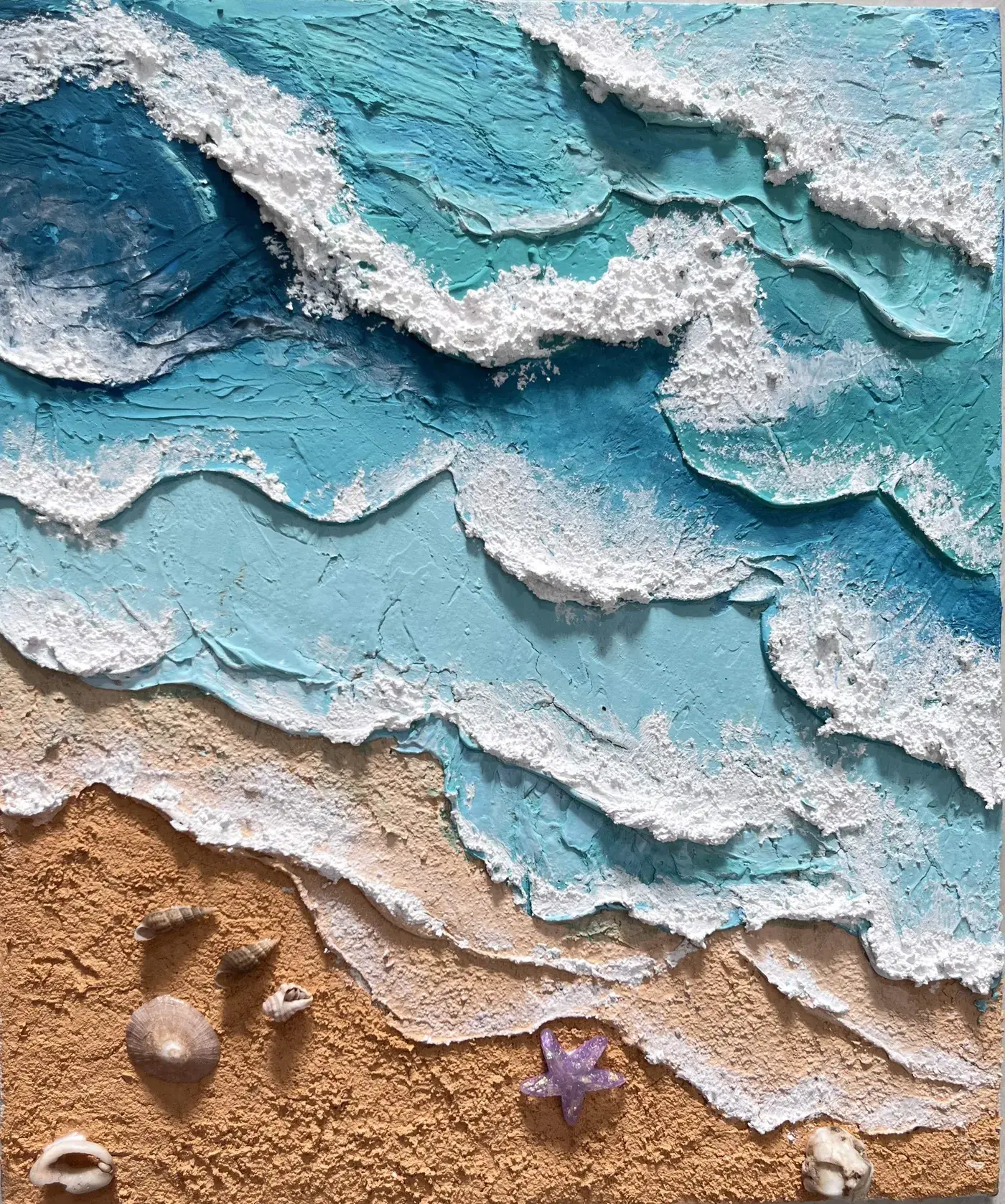
There is a moment in every texture piece where the work stops being paint and starts being terrain. You run a scraper through modelling paste, pull back, and the surface holds a ridge that will still be there when it dries. Nothing about that is reversible.
That irreversibility is the whole appeal. Flat painting forgives. You glaze over a mistake, wait, and try again. Texture does not forgive in the same way — it records. Every pass of the knife stays in the surface as evidence of the hand that made it.
Building up, not covering over
The method runs opposite to how most people learn to paint. Instead of laying colour onto a surface, you build the surface first and let colour follow it.
Paste goes down in stages. The first layer is structural — where the wave will break, where the sand will rise. It has to dry properly, and drying takes longer than anyone expects. Rushing it produces cracks that look like mistakes rather than intention.
Only when the terrain is set does pigment arrive, and it arrives thin. Thin paint sinks into the low points and skips the ridges, which is what makes a textured surface read as depth rather than as decoration. Thick paint would flatten everything you just built.
Light does half the work
A textured canvas is never finished in the studio, because the studio has one kind of light. The same piece reads differently on a north wall in the morning and under a lamp at night. The ridges throw shadows that move.
This is worth knowing before you hang one. A texture piece wants raking light — light that arrives from the side rather than head-on. Lit flat from the front, the surface collapses and the work loses the thing that made it interesting.
Why shells and sand belong in the paint
Adding real material — sand, shell fragments, pearl — is not a gimmick, though it can become one. The test is whether the material is doing something the paint could not.
Sand gives a grain that no brush replicates. A shell placed at the tideline gives scale, and scale is what convinces the eye that a twelve-inch board is a coastline. Used carelessly, the same materials read as craft-store filler. The difference is restraint.
What the work asks of you
People come to texture expecting it to be easier than painting, because it looks less precise. It is not easier. It is a different discipline: less drawing, more patience, and a willingness to commit before you can see the result.
The reward is a surface that changes as you move past it. That is not something a flat image can do.