12 April 2026 · 1 min read
On stillness, and why most paintings are too loud
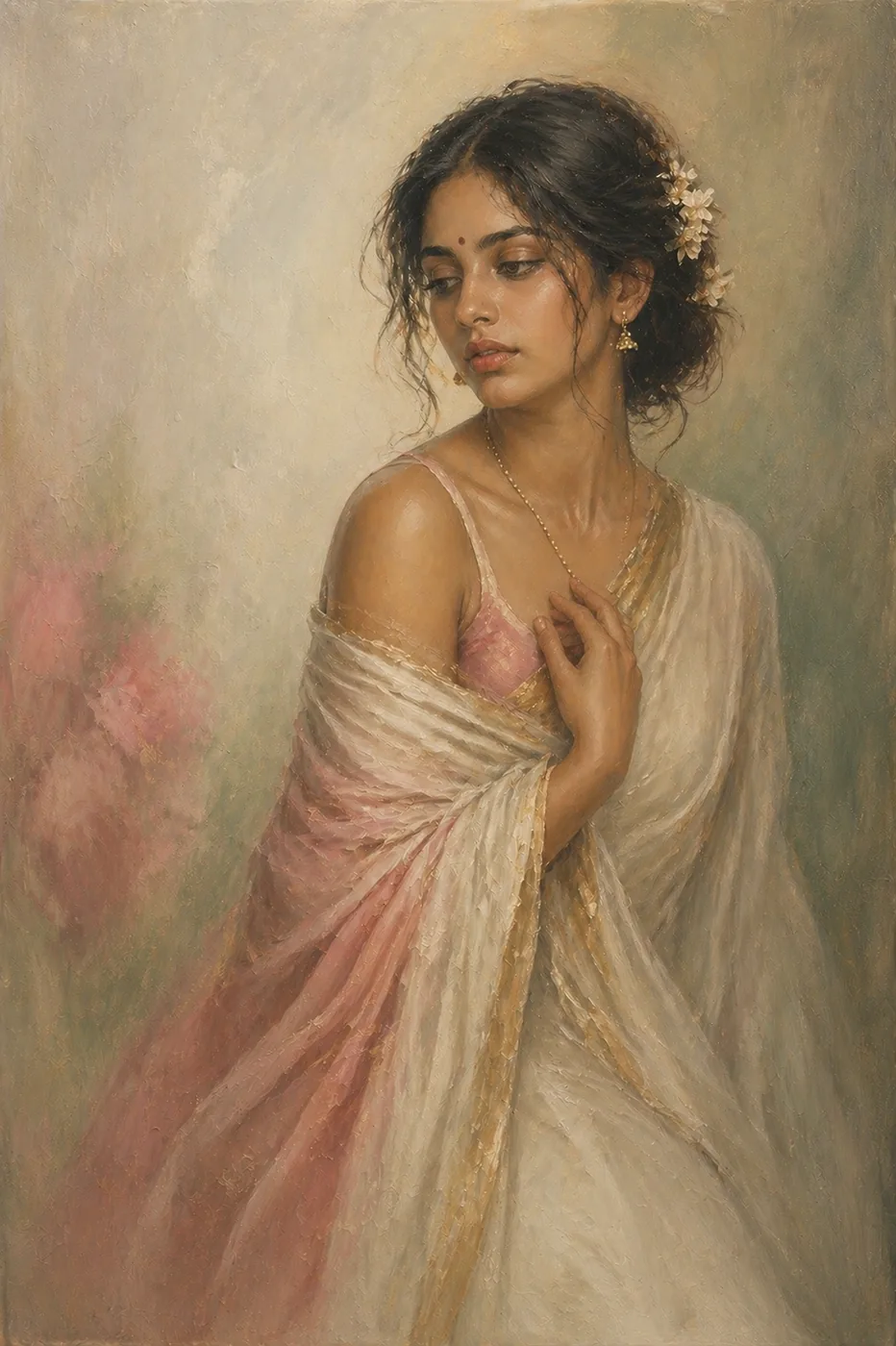
Stillness in a painting is not the absence of movement. It is movement held — a small, contained breath that asks the viewer to slow down.
There is a kind of painting that arrives like a held breath. You walk past it once, twice, and then on the third pass it pulls you in — not because it is loud, but because it is quiet enough to make the rest of the room feel loud.
Most paintings I see in galleries try too hard. They wave their hands. They demand attention before they have earned it. Stillness, by contrast, is patient. It trusts the viewer to come closer.
What stillness actually is
Stillness is not the absence of movement. It is movement held — a small, contained breath. A figure mid-turn, a leaf about to fall, the light just before it shifts. The painting arrests time without freezing it.
To paint stillness, you have to slow yourself down first. The hand cannot move faster than the seeing.
Three practices
- Look longer than you think you need to. Most of what we miss is on the second look.
- Let edges soften. A hard edge insists. A soft one invites.
- Leave more out than you put in. Empty space is not empty — it is where the eye rests.
A finished painting is one where nothing more needs to be said.